The fertilizer sector in India is one of the most important industries supporting agriculture and food security. Fertilizers supply essential nutrients such as nitrogen, phosphorus and potassium to crops, helping farmers improve yields and maintain soil productivity. India is one of the world’s largest consumers of fertilizers because of its large agricultural sector, diverse cropping patterns and substantial population.
In 2026, India’s fertilizer industry is balancing two important objectives: ensuring that farmers have access to affordable fertilizers while reducing excessive dependence on imports. The government is supporting domestic manufacturing, nutrient-use efficiency, new production capacity and balanced fertilizer application.
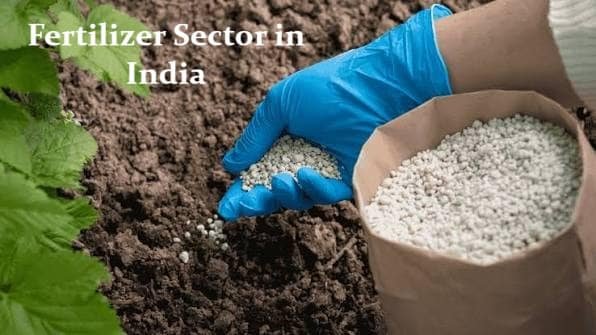
Major Types of Fertilizers in India
Fertilizers can broadly be divided according to the nutrients they provide.
Urea
Urea is India’s most widely used nitrogen fertilizer. It supplies nitrogen, which is essential for plant growth and the development of leaves and stems.
Urea is heavily subsidised by the government, and farmers receive it at a controlled maximum retail price. Because of its relatively low price compared with other nutrients, excessive urea use has historically contributed to an imbalance in fertilizer consumption.
DAP
Di-ammonium phosphate (DAP) provides both nitrogen and phosphorus. It is widely used during sowing because phosphorus supports root development and early plant growth.
India imports a significant portion of its DAP requirements because domestic production of phosphatic fertilizers depends partly on imported raw materials and intermediates.
MOP
Muriate of Potash (MOP) is a major source of potassium. India has limited domestic potash resources and therefore depends heavily on imports.
Potassium improves plant strength, water-use efficiency and resistance to certain stresses, making it an important nutrient for balanced crop nutrition.
NPK Fertilizers
NPK fertilizers contain nitrogen, phosphorus and potassium in different proportions. They allow farmers to apply multiple nutrients through a single product.
India is increasingly encouraging the use of balanced NPK fertilizers and specialty fertilizers to reduce excessive dependence on nitrogen.
Nano Fertilizers
Nano fertilizers are an emerging category. Products such as nano urea are designed to improve nutrient-use efficiency by delivering nutrients in formulations that can be applied in smaller quantities.
Fertilizer Production in India
India has expanded its domestic fertilizer production capacity considerably, particularly for urea.
According to government data, indigenous urea production increased from approximately 225.73 lakh metric tonnes in 2014–15 to 314.07 lakh metric tonnes in 2024–25. The increase has reduced India’s dependence on imported urea. (pib.gov.in)
During the first half of FY2025–26, urea production was approximately 154.88 lakh metric tonnes, compared with 152.18 lakh tonnes during the corresponding period of the previous year. (pib.gov.in)
Domestic production has been supported by the revival of fertilizer plants and new capacity. Major urea plants have been developed or revived at Ramagundam, Gorakhpur, Sindri, Barauni and Talcher, helping increase India’s production capability.
However, India still imports fertilizers and raw materials, particularly phosphatic and potassic fertilizers.
Major Fertilizer Companies in India
India has a mixture of public-sector enterprises, cooperatives and private fertilizer manufacturers.
Indian Farmers Fertiliser Cooperative Limited
IFFCO is one of India’s largest fertilizer cooperatives. It manufactures and markets urea, NPK fertilizers, DAP and specialty products. IFFCO has also been an important player in the development and promotion of nano fertilizers.
National Fertilizers Limited
NFL is a major public-sector urea manufacturer with several large production plants. It supplies fertilizers to farmers across different agricultural regions.
Rashtriya Chemicals and Fertilizers
RCF produces urea and complex fertilizers and also manufactures industrial chemicals used in agriculture and other sectors.
Coromandel International
Coromandel International is a major private-sector fertilizer company, particularly strong in phosphatic and complex fertilizers, crop protection and agricultural services.
Chambal Fertilisers
Chambal Fertilisers and Chemicals is one of India’s major private-sector urea producers and operates large fertilizer manufacturing facilities in Rajasthan.
Other important companies include Fertilizers and Chemicals Travancore (FACT), Paradeep Phosphates, Gujarat Narmada Valley Fertilizers & Chemicals (GNFC), Gujarat State Fertilizers & Chemicals (GSFC), Madras Fertilizers and Deepak Fertilisers.
Government Support and Subsidies
The government plays a central role in the fertilizer sector because fertilizer prices significantly affect farmers.
Under the Nutrient Based Subsidy (NBS) system, subsidies are provided on phosphatic and potassic fertilizers based on their nutrient content. Urea, meanwhile, is sold at a controlled price, with the government compensating manufacturers for the difference between the cost of production/import and the farmer-facing price.
For 2026–27, the government has maintained substantial support for fertilizer availability and affordability. The Union Budget also continued emphasis on domestic manufacturing and agricultural productivity.
The government has also promoted the PM-PRANAM initiative to encourage states to reduce excessive chemical-fertilizer use and promote alternative and balanced nutrient practices.
Nano Fertilizers and Technology
Technology is becoming an increasingly important part of India’s fertilizer strategy.
Nano urea is designed to provide nitrogen more efficiently through foliar application. IFFCO has promoted nano urea as a technology that can complement conventional fertilizers and potentially reduce the quantity of bulk urea required.
Digital agriculture is also changing fertilizer application. Soil testing, satellite imagery, sensors and farm-management platforms can help farmers identify nutrient deficiencies and apply fertilizers more precisely.
Precision agriculture can reduce unnecessary fertilizer use, lower costs and improve environmental outcomes.
Importance for Indian Agriculture
Fertilizers are essential for India’s agricultural productivity. India’s large population requires substantial food production from limited cultivable land, making efficient nutrient management particularly important.
Fertilizers can increase yields of cereals, pulses, oilseeds, vegetables and commercial crops when applied appropriately.
The sector also supports rural economic activity through manufacturing, transportation, storage, retail distribution and agricultural services.
However, fertilizer availability alone is not sufficient. Farmers need access to quality seeds, irrigation, mechanisation, soil testing, extension services and reliable markets to achieve higher productivity.
Challenges Facing the Fertilizer Sector
The biggest challenge is import dependence for certain fertilizers and raw materials. India has limited domestic availability of natural gas, potash and some phosphate resources, requiring imports.
Global commodity prices, geopolitical disruptions and shipping costs can therefore affect fertilizer availability and government subsidy expenditure.
Another challenge is imbalanced fertilizer use. Excessive nitrogen application and insufficient use of phosphorus, potassium and micronutrients can reduce soil health and nutrient-use efficiency.
Environmental concerns are also increasing. Fertilizer production consumes significant energy, while excessive application can contribute to water pollution and greenhouse-gas emissions.
The industry therefore needs to improve production efficiency while encouraging farmers to use fertilizers according to soil and crop requirements.
Future of the Fertilizer Sector in India
The future of India’s fertilizer sector will focus on domestic production, balanced nutrition, specialty fertilizers, nano technology and greater nutrient-use efficiency.
India is likely to continue expanding urea capacity while seeking more reliable domestic and international sources of phosphatic and potassic nutrients.
Nano fertilizers and other innovative products could become more important as farmers and policymakers focus on reducing the volume of conventional fertilizers required per unit of crop production.
Digital soil testing and precision agriculture can also improve fertilizer recommendations. Artificial intelligence and satellite-based systems may eventually provide farmers with more location-specific nutrient advice.
The industry will also need to become more sustainable by improving energy efficiency, reducing emissions and promoting responsible nutrient management.
Conclusion
The fertilizer sector in India in 2026 remains critical to food security, agricultural productivity and farmer incomes. Domestic urea production has increased significantly over the past decade, while companies such as IFFCO, NFL, RCF, Coromandel International and Chambal Fertilisers continue to supply essential nutrients to farmers.
The next phase of growth will not simply be about producing more fertilizer. It will focus on producing efficiently, reducing import vulnerabilities and ensuring balanced nutrient use.
With expanded domestic capacity, nano-fertilizer technology, precision agriculture and stronger soil-health awareness, India can build a fertilizer system that supports higher agricultural productivity while reducing costs and environmental pressure. The sector will therefore remain strategically important as India works towards greater food security and a more sustainable agricultural economy.