The electronics sector in India has become a major pillar of the country’s manufacturing, exports, technology and employment ecosystem. From smartphones and televisions to computers, automobiles, telecom equipment, industrial electronics and semiconductors, electronic products are increasingly important to almost every part of the modern economy.
India’s electronics manufacturing industry has expanded dramatically over the past decade. Electronics production increased from approximately ₹1.9 lakh crore in 2014–15 to ₹13.11 lakh crore in FY2025–26, a nearly seven-fold increase. Electronics exports also rose from around ₹38,000 crore to ₹4.24 lakh crore during the same period.
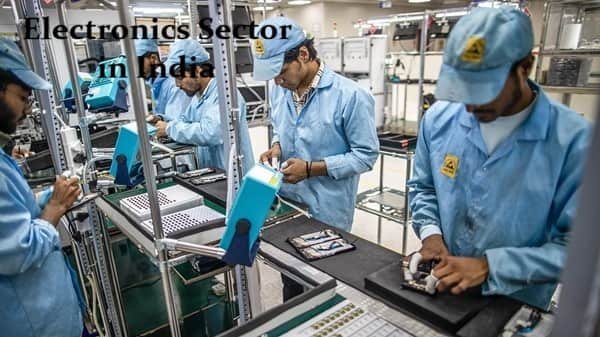
Electronics Manufacturing in India
Mobile phones have been the biggest success story in India’s electronics manufacturing transformation. Production of mobile phones increased from approximately ₹18,000 crore in 2014–15 to ₹6.27 lakh crore in FY2025–26. Mobile-phone exports increased even more sharply, reaching approximately ₹2.59 lakh crore in FY2025–26.
India is now the world’s second-largest mobile-phone manufacturer, with manufacturing facilities operated by global and Indian companies. The sector has also become an important source of employment, particularly for young workers and women. Overall electronics manufacturing supports around 25 lakh jobs, with approximately 12 lakh associated with mobile-phone manufacturing.
However, India’s electronics ambitions extend well beyond smartphones. The industry includes IT hardware, consumer electronics, automotive electronics, industrial electronics, telecom equipment, strategic electronics, wearables, LED lighting and electronic components.
Major Segments of the Electronics Sector
Mobile phones and smartphones remain India’s largest electronics manufacturing segment. Global brands and contract manufacturers have established large production facilities, particularly in states such as Tamil Nadu, Uttar Pradesh and Karnataka.
Consumer electronics includes televisions, audio equipment, appliances and other household devices. Rising incomes and increasing digital adoption are supporting domestic demand.
IT hardware includes laptops, tablets, servers and related equipment. Government incentives are designed to encourage greater domestic production and supply-chain development in this segment.
Automotive electronics is becoming increasingly important as vehicles adopt advanced infotainment systems, sensors, electronic control units, driver-assistance technologies and electric-vehicle components.
Telecom electronics includes network equipment, optical equipment and communication hardware, supported by India’s expanding digital and 5G infrastructure.
Strategic electronics covers equipment used in defence, aerospace, surveillance, communications and other critical applications.
Electronic components such as printed circuit boards, camera modules, connectors, displays, sensors and passive components form the foundation of the entire industry.
Major Electronics Companies in India
India’s electronics ecosystem includes global technology companies, contract manufacturers, domestic brands and component producers.
Samsung has established significant manufacturing and R&D operations in India, particularly in smartphones and consumer electronics.
Apple has substantially expanded its Indian manufacturing ecosystem through contract manufacturers and suppliers, making India an increasingly important production base for iPhones and related components.
Foxconn is one of the major contract manufacturers supporting India’s smartphone-export growth and has invested significantly in manufacturing capacity.
Tata Electronics has emerged as an important Indian player in electronics manufacturing, including semiconductor and component-related activities.
Dixon Technologies is one of India’s leading electronics manufacturing services companies, producing smartphones, televisions, wearables and other electronic products for major brands.
Other important companies include Pegatron, Lava International, VVDN Technologies, Optiemus Electronics, Bharat Electronics, Kaynes Technology and Syrma SGS Technology.
The ecosystem also includes hundreds of MSMEs supplying components, assemblies, tooling, packaging and specialised manufacturing services.
Electronics Exports and Global Supply Chains
Electronics has become one of India’s fastest-growing export categories. The government reported that electronics exports increased to ₹4.24 lakh crore in FY2025–26, compared with approximately ₹3.27 lakh crore in FY2024–25.
Smartphones have played a particularly important role. Government data indicates that smartphones became India’s largest export commodity in calendar year 2025, reflecting the country’s increasing integration into global electronics supply chains.
This growth is important because electronics manufacturing can create higher-value industrial employment and encourage the development of suppliers, logistics companies, testing facilities and technology services.
India is also seeking to diversify its electronics exports beyond smartphones into IT hardware, telecom equipment, automotive electronics, components and strategic electronics.
Government Policies Supporting Growth
Government policy has played a central role in building India’s electronics industry.
The Production Linked Incentive (PLI) Scheme for Large Scale Electronics Manufacturing was introduced to encourage large-scale production and attract global manufacturers. By March 2026, the scheme had attracted more than ₹20,600 crore in cumulative investment, while cumulative production exceeded ₹11.62 lakh crore and exports crossed ₹6.53 lakh crore.
The Electronics Component Manufacturing Scheme (ECMS) is designed to deepen domestic manufacturing beyond final assembly. The Union Budget 2026–27 increased its outlay to ₹40,000 crore. By August 2026, 106 ECMS projects had been approved across 15 states, involving ₹69,548 crore of investment and projected production of ₹5.34 lakh crore.
The scheme covers critical components and materials such as printed circuit boards, camera modules, connectors, passive components, optical transceivers and other supply-chain products.
Semiconductor Manufacturing
Semiconductors are increasingly becoming the next major priority for India’s electronics industry. Chips are essential for smartphones, automobiles, computers, defence systems, telecom equipment and industrial machinery.
Under the Semicon India Programme, 12 projects had been approved with committed investment of approximately ₹1.64 lakh crore, with three projects already entering commercial production.
In July 2026, the government approved Semicon 2.0 with an outlay of ₹1,27,500 crore. The programme aims to expand semiconductor fabrication, advanced packaging, chip design and the broader ecosystem of materials, gases and manufacturing equipment.
Developing this ecosystem could help India increase domestic value addition and reduce dependence on imported semiconductor components.
Technology and Value Addition
A major challenge for India is that electronics manufacturing has historically depended on imported components. While final assembly has expanded rapidly, domestic value addition has been estimated at around 18–20%.
The next phase therefore focuses on manufacturing more components within India. This includes displays, camera modules, PCBs, connectors, batteries, sensors and other sub-assemblies.
Artificial intelligence, robotics, automation and advanced testing can further improve productivity and quality. Electronics factories are increasingly adopting automated assembly lines, machine vision, data analytics and digital production systems.
Challenges Facing the Sector
Despite rapid progress, India faces several challenges.
Component dependence remains one of the biggest issues. Building competitive domestic component manufacturing requires substantial investment, technical expertise and reliable supply chains.
The industry also faces intense competition from China, Vietnam, South Korea and other established electronics-manufacturing hubs.
Skilled manpower is another requirement. Semiconductor fabrication, advanced electronics design, precision manufacturing and testing require specialised engineering capabilities.
Supply-chain disruptions, geopolitical tensions and fluctuations in raw-material prices can also affect manufacturers.
India must additionally maintain competitive logistics, electricity costs, infrastructure and regulatory stability to attract long-term global investment.
Future of Electronics in India
The future of India’s electronics sector is likely to move from assembly-led growth towards deeper manufacturing, component production, semiconductor capabilities and indigenous design.
The government has set an ambitious vision of developing a $500 billion domestic electronics manufacturing ecosystem by 2030–31, alongside a target of approximately $150 billion in electronics exports.
Smartphones will remain important, but new growth opportunities are expected in semiconductors, IT hardware, automotive electronics, telecom equipment, medical electronics, industrial systems, defence electronics and renewable-energy equipment.
India’s large domestic market provides an additional advantage. Growing smartphone adoption, digital services, electric vehicles, 5G networks and smart infrastructure will continue creating demand for electronic products.
Conclusion
The electronics sector in India in 2026 has evolved from a largely import-dependent market into a major global manufacturing and export base. Electronics production has reached ₹13.11 lakh crore, exports have crossed ₹4 lakh crore and mobile manufacturing has become a major contributor to industrial growth.
The next challenge is to deepen the ecosystem. Greater domestic production of components, semiconductors, manufacturing equipment and advanced sub-assemblies will determine how much value India captures from global electronics supply chains.
With PLI schemes, ECMS, Semicon 2.0, growing private investment and a large domestic market, India has a strong foundation to become a leading global electronics manufacturing hub. The industry’s future will depend on combining scale, technology, skilled talent, domestic value addition and global competitiveness.